What Makes a Tower Clock Accurate? Five Timekeeping Factors to Check
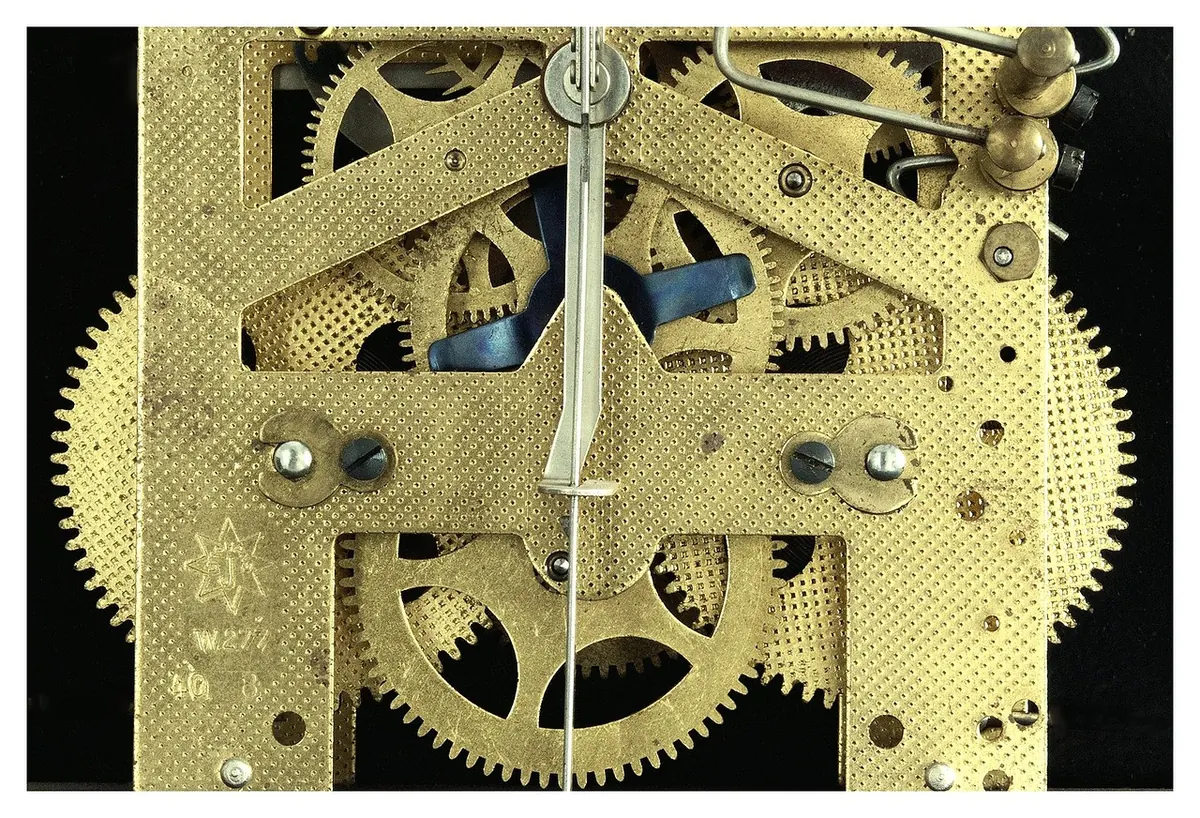
A tower clock is a machine asked to be right for decades at a stretch, in a room nobody visits, driving hands two or three metres long through frost, heat and the sway of bells. When one drifts a minute a week, the cause is rarely mysterious. In most towers I have seen, the fault sits in one of five places: the length of the pendulum, the condition of the escapement, the temperature of the room, the alignment of the dial and hands, or the rhythm of winding.
None of these requires a laboratory. They require a notebook, a torch, a ladder you trust and the patience to change one thing at a time. Here is what each one is really telling you.
Pendulum Length: The Measure That Sets the Beat
The pendulum is the clock's heart, and its effective length is the rate control. The relationship is short and unforgiving: the period of a swing goes with the square root of the length, so a very small change in length makes a noticeable change in rate. On a typical seconds pendulum, roughly a millimetre of length is worth something like forty seconds a day. That is why the rating nut is threaded finely and why a quarter turn is usually plenty.
Check three things before you touch that nut. First, that the bob is firmly clamped and has not crept down its rod. Second, that the rating thread is clean and the nut turns freely — a stiff nut that you force can strip a century-old thread that nobody stocks. Third, that the suspension at the top of the rod is sound: a tired suspension spring or a worn crutch slot changes the effective length as much as the bob does, and far less predictably.
When you do adjust, move the bob up to make the clock gain, down to make it lose, and wait. A pendulum needs several days to settle into a new rate. Judge it over a week, not an afternoon.
Escapement Condition: Where Wear Shows Up First
The escapement takes the punishment. Every beat, the pallets slide across the escape wheel teeth and give the pendulum its small push. Over years, impulse faces groove, teeth round over, pivot holes oval and oil turns to a sticky brown film that holds dust like a trap.
Your ears are the first instrument. Stand in the clock room and listen. The beat should be even and unhurried, with no double tick, no hesitation and no scrape. A clock that stops at the same time each day is telling you something specific — a damaged tooth, a tight spot in the train, a hand fouling the chapter ring at that hour — and the time it stops is a clue, not a coincidence.
Look for:
- Grooves or bright flats on the pallet faces where the teeth have worn in.
- Oil that has gone dark, gummy or stringy, especially on the escape wheel arbor.
- Iron filings or black dust beneath the movement, which usually means a pivot is running dry.
- A crutch that sits slack on its arbor, so the impulse arrives late and unevenly.
- Bell-ringing vibration: if the rate worsens on practice nights, the movement is being shaken.
Cleaning and re-oiling an escapement is skilled work, and the wrong oil in the wrong quantity is worse than none. If the wear is real, call in a clockmaker before a repair becomes a rebuild.
Temperature: The Slow Seasonal Drift
Metal expands. A steel pendulum rod gains or loses roughly half a second a day for each degree Celsius it moves, which sounds trivial until you consider that a tower room can swing fifteen or twenty degrees between January and July. That is a seasonal error measured in seconds per day, and it will look like a mystery drift unless you write down the temperature alongside the rate.
Better clocks answer this with compensation: an Invar rod, a gridiron of brass and steel, or a mercury jar. If your clock has one, treat it as a precision assembly rather than an ornament. If it does not, your options are environmental.
Practical temperature moves
Keep the clock room draught-free but not sealed, because damp is a worse enemy than cold. Never install a heater beside the pendulum. Watch for a shaft of sunlight that lands on the rod for an hour each afternoon in spring — a genuinely common cause of a clock that gains only in April. Record temperature at the same time as you record the rate, and after a year you will have a curve you can correct against.
Dial Alignment and Hand Setting
Some accuracy problems are not in the movement at all. They live between the clock and the face.
Tower dials are driven through a long dial train — shafts, couplings, bevel gears and sometimes several floors of ironwork. Any slack in that train shows up as backlash: the hands sit a little behind where the movement thinks they are, and the error changes direction depending on which way the hands last moved. Worn bevel gears, loose couplings and dry bearings all make it worse.
Then there is the visual side. A minute hand that is a fraction off its arbor will read wrong from the street even when the clock is perfect. So will a hand that has been re-fitted a degree out. Check at the quarter marks and at twelve, and check the hour and minute hands against each other, not just against your watch. If the dial itself has shifted on its frame, the hands will be right and the numerals wrong — stand at the base of the tower and look up, because that is the view that matters.
Winding Consistency: The Human Variable
Weight-driven tower clocks are blessed with constant torque: a falling weight pulls with the same force at the top of its fall as at the bottom. Wind them at irregular intervals and the rate barely notices — though the weight must never be allowed to reach the floor, and the line, pulley and guides need inspecting while the load is off them.
Spring-driven clocks are a different matter. A mainspring delivers less force as it unwinds, so the pendulum's impulse weakens through the week and the rate shifts with it, unless the movement has a fusee or maintaining power. For these, winding at the same hour on the same day is not fussiness; it is part of the timekeeping.
Treat winding as an inspection round, not a chore. Two minutes looking and listening at each wind will catch a fraying line or a dry bearing long before it stops the clock.
A Routine That Catches Drift Early
Accuracy is maintained by small, regular attention. A workable routine looks like this:
- Weekly: wind, listen to the beat, note the indicated time against a reliable reference and write both down.
- Monthly: work out the rate across the whole period in seconds per day, not minutes in an hour. Short intervals lie.
- Seasonally: record room temperature with the rate, look for the seasonal curve, and check that nothing new shadows or heats the pendulum.
- Annually: inspect the escapement, the suspension, the dial train and the hands, and have the movement cleaned and lubricated on a clockmaker's schedule.
Change one thing at a time, and give each change a week before you judge it. Keep the notebook — a clock's history is its best diagnostic tool, and the entry you made last autumn may explain the error you are chasing now. And where the work involves height, dial access or historic fabric, use proper access equipment and get the building owner's agreement before anyone goes up the tower.
Photo: 1676769 / Pixabay