Seasonal Maintenance Checklist for Bell Towers Before Winter

The first hard frost usually arrives overnight, and a tower that has been quietly shedding autumn rain for weeks suddenly has nowhere to put the water. Slats split. Putty lets go. A rope that was merely damp in October is stiff and short by December. None of it is dramatic, which is exactly why it gets missed.
The weeks before freezing weather are the best working window of the year in a bell tower. Days are still long enough for a proper look, roofing work is far safer than it will be in January, and most of what goes wrong over winter can be prevented with a brush, a spanner and a notebook. What follows is the routine worth following in any tower, working from the louver banks at the top down to the hatch at the bottom.
Why the Cold Finds Every Gap
Water is the whole story. It gets into a hairline crack in stone, lead or timber, freezes overnight, expands, and widens the crack a little further. Repeat that twenty or thirty times between December and March and a small defect becomes a repair. The same applies to gutters that back up, hoppers that overflow, and louver sills that hold a puddle because a drainage hole is blocked with leaves.
Cold also changes how a tower's machinery behaves. Grease stiffens, clearances tighten, timber swells and shrinks with the weather, and iron that has been sitting at five degrees below zero all night will attract condensation the moment milder, damper air moves through the bell chamber. A tower that is sealed tight against draughts is not a dry tower. It is a tower full of wet iron.
Survey the Outside Before You Climb
Start on the ground with binoculars, ideally in low morning light that shows damp patches and staining. Walk the full perimeter, not just the side you can see from the path. Look at the roof covering, the flashings around the spire or lantern, gutters, downpipes and hoppers, then the louver banks, the clock faces and the stonework below each opening. Rust runs, dark tide marks and streaks of green on stone tell you where water is travelling.
Then go inside. Work up through the tower rather than down: intermediate floors, clock room, bell chamber. In the bell chamber, look up at the louver openings from underneath — that is where you see daylight through a slat that has rotted or a fixing that has gone, and where you see the water staining on the frame that tells you the louver above is no longer shedding rain properly.
Photograph everything, keep the images dated and in one folder, and write down the things you cannot fix this week. A tower log sounds like bureaucracy until the day you need to know whether a crack was there last autumn.
Louvers: The Tower's Weather Wall
Louvers do two jobs at once: they let the sound out and keep the rain off the bells. When they fail, the damage happens out of sight, on the headstocks, the frame and the rope. Check every slat for movement, split timber, failed putty, loose or corroded screws, and perforation along the bottom edge of metal slats where water sits longest.
Look closely at the junction between the louver frame and the masonry. A failed mortar fillet or a gap at the sill is a direct route for water onto the bells. Clear leaves, twigs and old nest material from behind the slats so that any water which does get in can drain away, and check that bird netting and mesh are intact and properly fixed before winter storms test them.
A simple louver routine
- Brush out debris from sills, channels and the space behind the slats.
- Test each slat by hand; tap timber slats and listen for a dull note that suggests rot.
- Replace missing or corroded fixings with the correct grade of stainless steel, not whatever is in the box.
- Check sills and weepholes run free, and clear them with a stiff wire.
- Repair nets, mesh and bird guards now, while the weather allows a safe working window.
- Note any gaps that need closing, but keep the chamber ventilated — sound and air both need a way out.
Clock Faces and the Movement
Clock dials take a beating. Check the glazing for cracked panes and failed putty, and look at the dial frame for rust and soft timber. Water that gets behind a dial usually tracks inward, and by the time it reaches the movement you are looking at a repair rather than a reseal. If the dial is illuminated, check the seals and wiring and look for condensation inside the fittings.
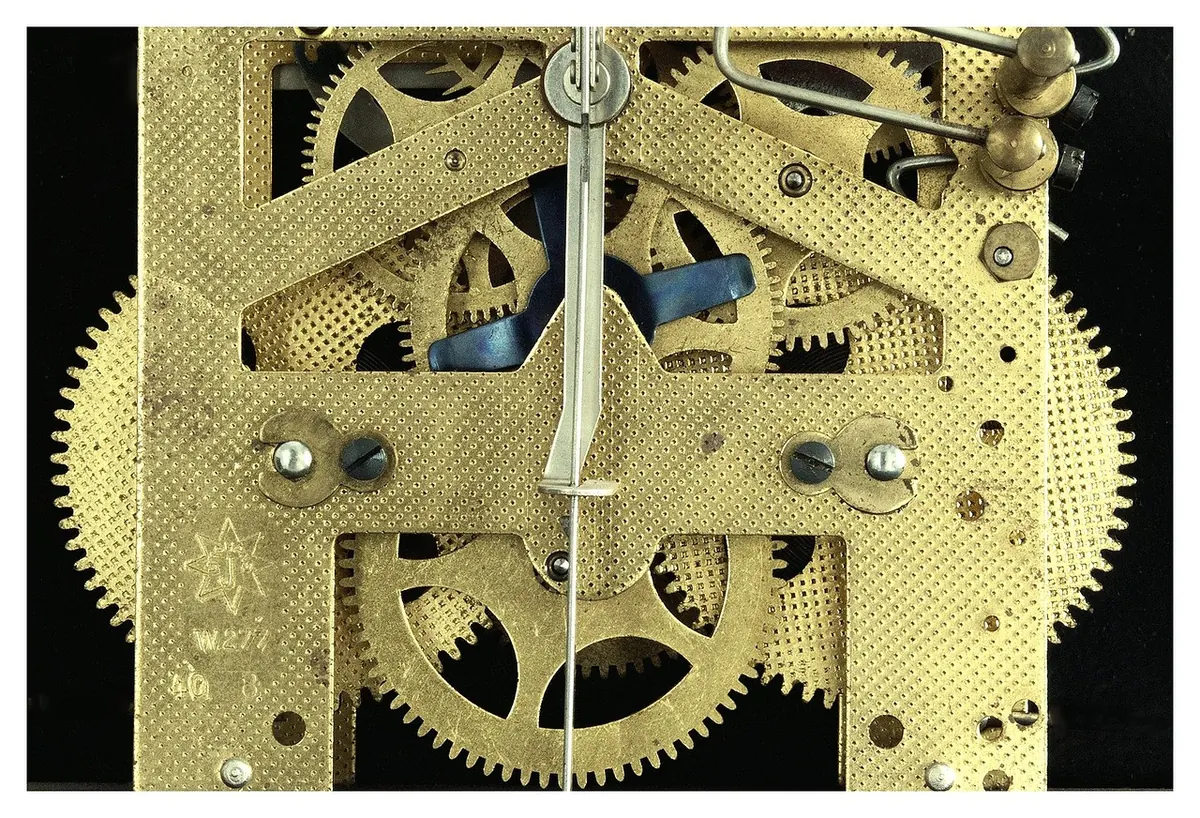
Check that the hands are tight on their spindles. A hand that works loose in a winter gale can foul the dial or the glazing. Inside, make sure the clock room is dry, that nothing drips onto the movement, and that case doors and seals actually close. If the movement is due a service, book it before the cold rather than after: lubricants that are fine in September can be noticeably stiff in a freezing clock room, and an automatic winding system is worth testing so that it cannot keep winding against a weight that is already resting on the floor.
Bell Fittings, Frame and Ropes
Fittings and frame should be inspected by an experienced bell hanger, and that inspection belongs in the annual calendar. What the tower's own people can do is look, listen and report. Note rust runs on headstock bolts, wear at the crown staple and clapper staple, the condition of the clapper flight, the wheel, the stay and the slider, and any corrosion where the frame sits on its steel beams. On timber frames, look for joints that have opened up and for soft wood around the bolts.
Ropes deserve their own attention. Check the sally for fraying, the rope where it passes through the guide and the garter hole, and the way the rope hangs. Rope length changes with humidity, so a rope that was right in a dry August may be short in a wet November. Ropes, like everything else in the chamber, last longer in a well-ventilated tower.
If a fitting looks worn, cracked or loose, photograph it and call the bell hanger. Ice, cold metal and a two-tonne bell are not a combination for experiments, and nobody should be climbing into a bell frame in winter to improvise a repair.
Access: Ladders, Hatches and Locks
Wooden ladders repay a careful look: split stiles, loose rungs, rot at the feet, sound wall fixings, and enough standoff to get a hand around the stile. On metal ladders, corrosion usually starts at the anchorages and in the damp corners where the tower never quite dries. Check that hatches open and close properly, that counterweights and hold-open stays work, and that nothing can slam shut on the person below.
Then the small things that ruin a January visit: a seized lock, a dead bulb, a torch with flat batteries. Clean and lubricate locks with a proper lock lubricant, keep a spare key with a named person, and replace failed lighting before the dark afternoons arrive. Anyone working at height should be competent, working with a second person present, using proper fall protection and choosing a calm, dry day. In places of worship, check the permissions and any faculty requirements with the building's owner before work begins.
The Pre-Winter Checklist
- Roof and drainage: clear gutters, hoppers and downpipes; check flashings and note slipped covering.
- Louvers: clean, test, refix, clear sills; repair nets and mesh.
- Clock faces: glazing, putty, dial frames, hand tightness, illumination seals.
- Clock room: no drips, dry movement, door seals, winding system tested.
- Bell fittings: visual check and written report for the bell hanger.
- Ropes: sally, guide, garter hole, length and hang.
- Ladders: stiles, rungs, feet, fixings and standoff.
- Hatches and doors: hinges, stays, latches, slam risk.
- Lighting and locks: bulbs, torches, batteries, lock lubrication, spare key.
- Records: photographs dated, defects logged, specialist work booked.
Leave a Record for January
Finish the round by writing down what you did, what you deferred and who is dealing with it. Two lines per item is enough. That record is what turns a seasonal scramble into a maintenance plan, and it makes the next inspection quicker because you know what you are comparing against. Book the bell hanger and any steeplejack work while the good weather still holds, and keep a note of the tower's damp history rather than relying on memory.
Do this in October or early November and the tower will spend the winter doing what it was built to do: standing still, staying dry, and ringing.
Photo: Franz26 / Pixabay